RECONSTRUCTIVE
Full hairline rebuild from advanced hair loss or alopecia. No existing reference points — skull morphology is the sole diagnostic input.
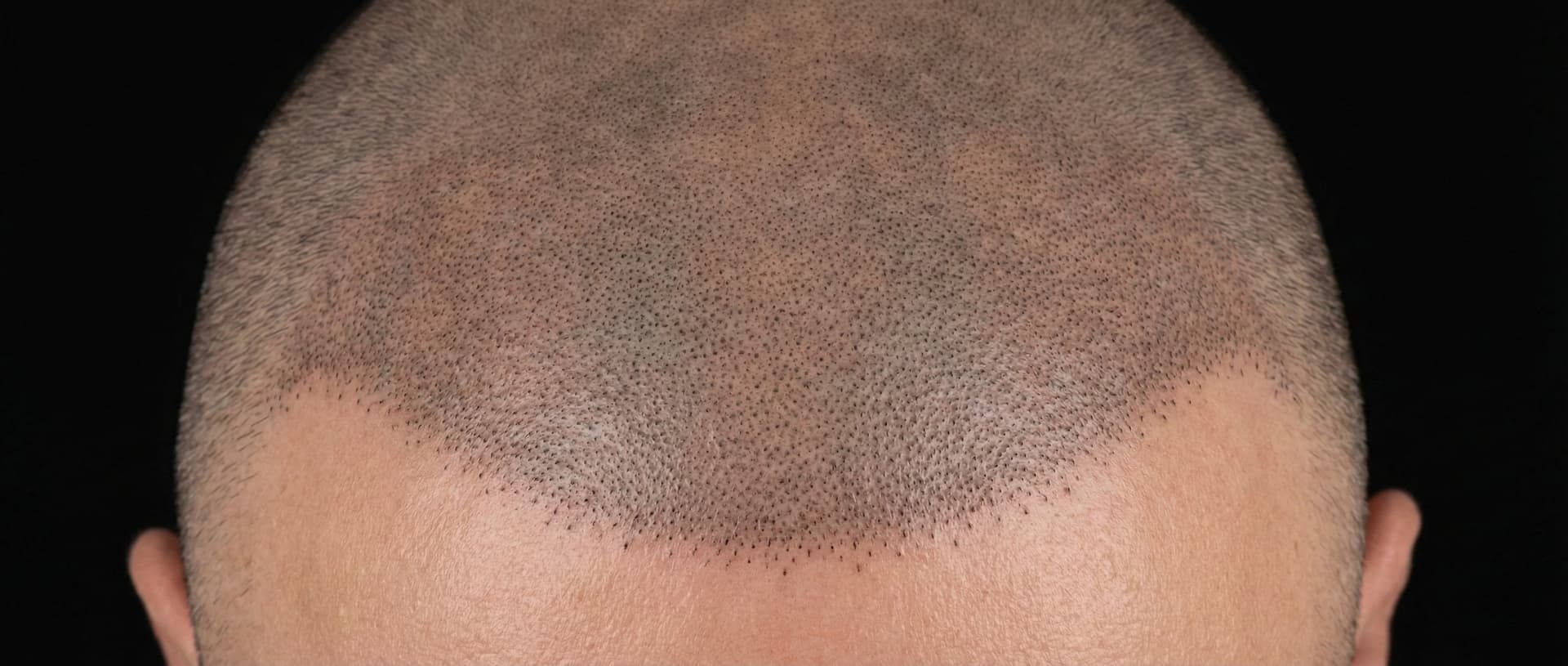
The Reconstructive profile is the most complex classification in the KORT system. It applies to clients with Norwood 5+ hair loss or alopecia conditions where no usable existing hairline remains. The practitioner must build an entire hairline from scratch using skull morphology as the sole diagnostic input.
Every decision about position, shape, density, and transition must be derived from reading the skull. Placing the hairline outside the envelope defined by the supraorbital ridge, temporal ridges, and frontal bone curvature will always look artificial regardless of dot placement skill.
This is fundamentally different from every other profile, where the practitioner has some reference — existing hair, a recession pattern, a natural edge — to guide placement. Reconstructive work has no such reference.
The frontal bone anatomy becomes the primary diagnostic tool. The supraorbital ridge, temporal ridges, and frontal bone curvature together define the envelope within which a natural-looking hairline can exist.
The practitioner must also account for the client's age. A Norwood 6 client in their 50s receiving a hairline positioned for a 25-year-old will look incongruent. The hairline must be age-appropriate, which typically means a mature recessed position adapted to the specific skull geometry.
Density planning for reconstructive work spans the entire scalp, not just the frontal zone. Crown density, vertex whorl simulation, and overall coverage must be mapped before the first dot is placed. This is a multi-session commitment that requires comprehensive planning — not zone-by-zone improvisation.
This profile carries the highest responsibility. The client has likely tried other solutions and is investing significant trust. The practitioner must be honest about achievable outcomes during consultation.